Is Scuba Diving Scary? First-Dive Fears and the Facts
Not being able to breathe, ear pressure, the feeling of depth... Let's talk through the four most common worries and what's actually true underwater.
- Feeling nervous before a first dive is completely normal
- The regulator supplies air continuously; first breaths are taken at standing depth
- Ear pressure is managed with a one-second equalising technique
- Try dives happen in shallow, sheltered water; you set the pace
- Equipment is designed with backups and checked before every dive
First, know this: fear is normal
Most first-time divers arrive somewhere between excitement and nervousness; instructors see it every day, and the programmes are designed precisely around that feeling. Nothing on a try dive is rushed: you set the pace, and you can return to the surface whenever you want.
"I won't be able to breathe underwater"
The most common worry, and the first one to dissolve once you're in the water. The regulator supplies you with air continuously; all you have to do is breathe through your mouth, slowly and deeply. The first breaths are tried in shallow water, at a depth where you can stand. This is exactly the moment most people say "turns out that was the easy part".
"My ears can't take the pressure"
Ear fullness is real but manageable: you balance the pressure by pinching your nose and blowing gently (equalising). Your instructor teaches it before you enter the water and reminds you frequently with signals on the way down. The rule is simple: equalise early and often, before it hurts; if it's uncomfortable, stop, ascend a little, try again.
"Depth will make me panic"
A try dive already happens in shallow, sheltered water: not over a bottomless blue, but in a clear, calm bay with the seabed in sight. Your instructor stays within arm's reach and keeps eye contact with you throughout the dive.
"What if the equipment fails?"
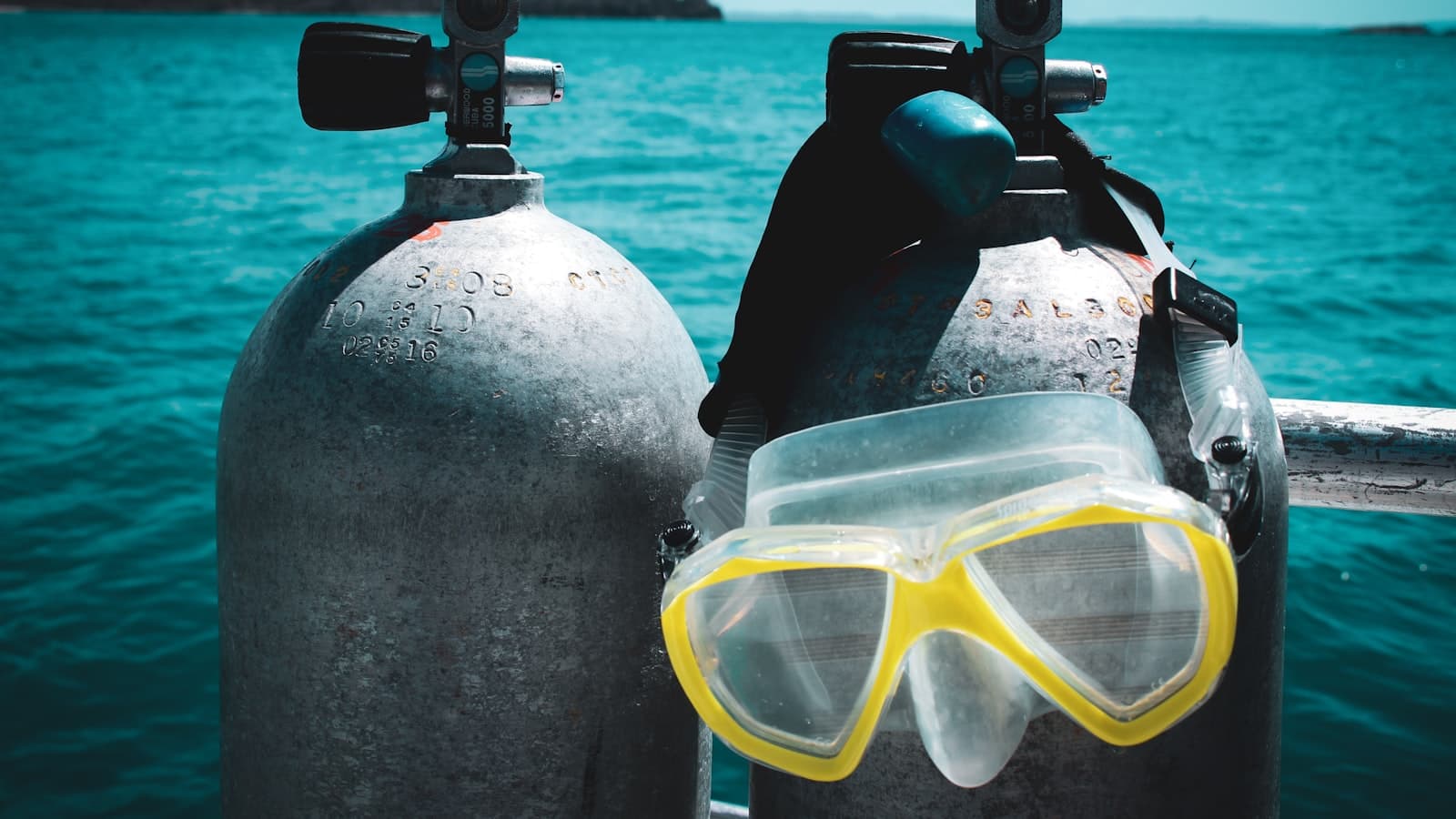
Dive equipment is designed with redundancy and checked before every dive; your instructor also carries an alternate air source they can hand you. If you're curious what each piece does, we wrote it up: Scuba Gear Guide
The small-steps strategy
If your anxiety is high, here's our suggestion: shrink the goal. Not "I'm going to scuba dive", but "I'm going to take three breaths from the regulator in shallow water". The rest almost always follows by itself. Knowing the day in advance also reduces anxiety; we wrote out exactly what awaits you, step by step: Your First Scuba Dive: What to Expect. When you feel ready, the discover scuba diving page is waiting.