Your First Scuba Dive: What to Expect on a Try Dive
Do you need to swim, how deep do you go, what is ear equalising? A step-by-step guide for first-time divers.
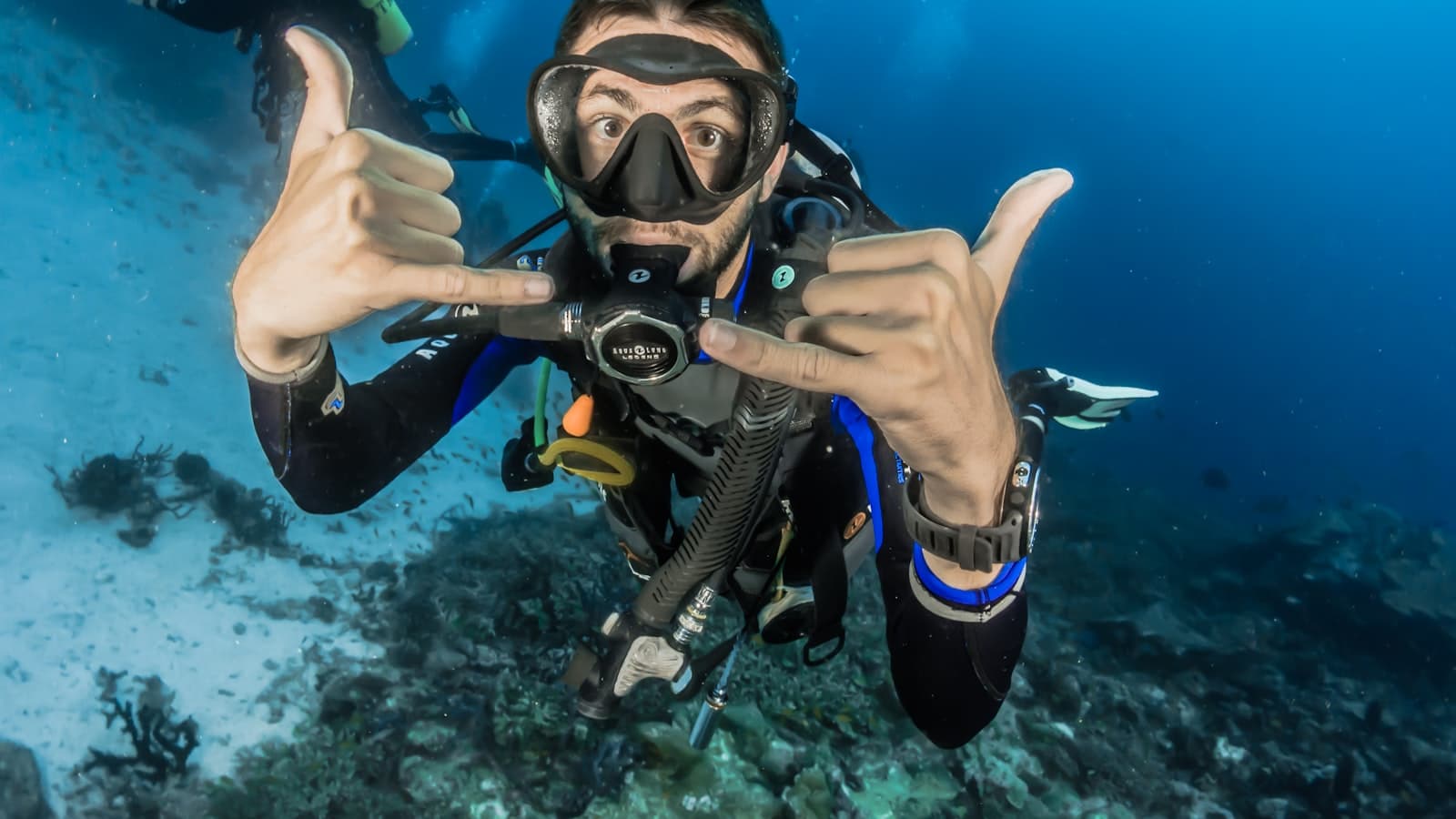
- A try dive is not a certification course: it's a first dive with an instructor
- Swimming is not required: the equipment carries you, the instructor guides you
- A typical programme takes half a day
- Bring a swimsuit, towel and sunscreen; all technical equipment is included
- Ear equalising is taught before you enter the water
What is a try dive?
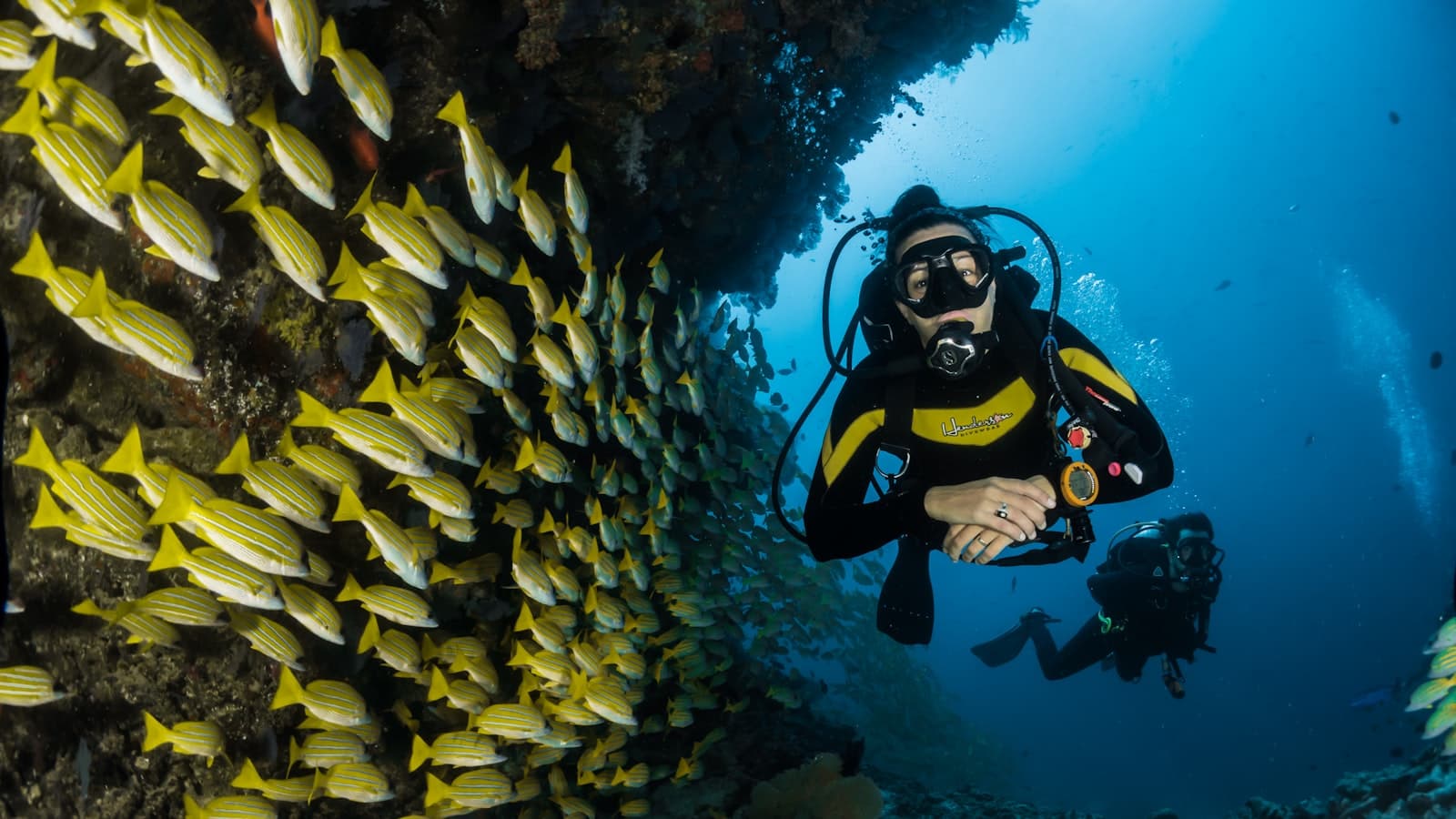
A try dive (discover scuba / introductory dive) is scuba diving tried under controlled conditions, accompanied by a professional instructor, by someone with no dive training at all. It is not a certification course: the goal is to let you experience breathing underwater and show you whether diving is for you.
After a short theory briefing and an introduction to the equipment, you enter the water one-to-one with your instructor at a shallow, sheltered site. The whole programme follows international training standards. For details and to leave a request, see our discover scuba diving page.
Who can join?
- Swimming is not required: the equipment carries you and your instructor guides you.
- Dive centres apply minimum age limits; tell us your child's age upfront and we'll clear it with the centre.
- A short medical self-declaration form is completed at sign-up; mention any chronic condition up front; a doctor's approval may be requested if needed.
- Glasses wearers can dive with contact lenses; mention the prescription-mask option upfront and we'll clear it with the centre.
How does the day go?
A typical programme takes half a day: meeting at the harbour, a short briefing and equipment fitting, a boat ride to a sheltered bay, and the first dive with your instructor. Times vary slightly from centre to centre, but the day follows this skeleton almost everywhere.
Ear equalising: the one critical skill
As you descend, you feel a pressure in your ears similar to being on a plane. The fix is simple: pinch your nose and blow gently (the Valsalva manoeuvre). Your instructor teaches this before you enter the water and reminds you frequently throughout the descent. Taking your time and equalising often is the most important comfort secret of a first dive.
What should you bring?
A swimsuit, a towel and sunscreen; that's all. All technical equipment is included in the price: mask, fins, tank, buoyancy jacket and wetsuit. Curious what each piece does? Have a look at our gear guide.
Is it normal to be scared?
Completely normal: most first-time divers start with a mix of excitement and a little apprehension. The good news: the try dive is designed exactly for that. You progress in shallow water, knowing you can return to the surface whenever you want, with your instructor keeping eye contact. The pace is entirely yours; nobody rushes you. We talk through the worries one by one here: Is Scuba Diving Scary?
And afterwards?
For most people a try dive becomes either a lovely holiday memory or a beginning. If you surface asking "when can I dive again?", the next step is an entry-level certification course; see the options on the courses page. Get to know the training systems here: PADI vs SSI vs CMAS.